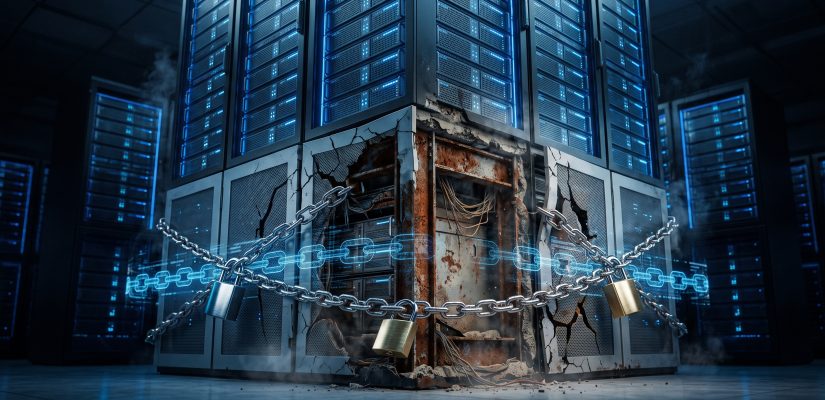
The Microsoft Monoculture: The World’s Most Dangerous Single Point of Failure

Let’s address the elephant in the server room. The global cybersecurity industry spends billions of dollars every year on next-generation firewalls, threat intelligence feeds, and AI-driven detection systems. Yet, we collectively ignore the most catastrophic systemic risk in modern IT: the absolute, overwhelming dominance of Microsoft.
If you look at the infrastructure of 95% of Small and Medium-Sized Enterprises (SMEs) and critical infrastructure (KRITIS) providers, you will see the exact same blueprint: Windows endpoints, Microsoft 365 in the cloud, and Active Directory (AD) holding the keys to the kingdom.
In nature, a biological monoculture is highly vulnerable; a single virus can wipe out an entire harvest because every organism shares the same weaknesses. In cybersecurity, we have actively built a digital monoculture. And the ransomware syndicates are harvesting it daily.
Active Directory: The Ultimate Kill Chain
For decades, Active Directory has been the undisputed backbone of corporate identity and access management. It is also the undisputed backbone of nearly every successful ransomware attack.
When a threat actor breaches a perimeter, their immediate goal is not to encrypt the first workstation they land on. Their goal is to escalate privileges, move laterally, and compromise the Domain Controller. Once Active Directory falls, the attacker owns your entire organization. They own your backups, your file servers, and your security policies.
Instead of demanding a fundamentally secure architecture, the industry has simply accepted that Active Directory is a fragile house of cards. We spend fortunes trying to build walls around it, but the structural rot remains inside.
The E5 Protection Racket
This brings us to the most cynical aspect of the Microsoft ecosystem. Over the past four decades of navigating IT architecture, from isolated mainframes to hyper-connected cloud environments, I have never seen a business model quite like this.
Microsoft builds an operating system and a directory service with deep, legacy-driven architectural flaws. Then, instead of fixing the root causes of these vulnerabilities at the base level, they upsell you. They offer premium E5 security licenses and expensive Defender modules to monitor the very holes they engineered into their own platform.
It is not a security model. It operates less like a security model and more like a highly profitable tax on their own structural flaws. You are paying the architect to protect you from the collapsing roof they designed.
The Single Point of Failure
The danger of this monoculture goes beyond targeted ransomware. When the entire planet runs on the same kernel and relies on the same update mechanisms, a single bad patch—whether from Redmond itself or a deeply embedded partner—can cause a global blackout. We have seen how a single faulty update can ground airlines, paralyze hospitals, and halt global supply chains in a matter of hours.
When your hypervisor, your operating system, your email suite, your collaboration tools, and your identity provider all come from a single vendor, you do not have an IT strategy. You have a massive Single Point of Failure (SPOF).
The vCISO Mandate: Architectural Diversification
As a Virtual CISO, my job is not to sell you more Microsoft licenses; it is to protect your business survival. True cyber resilience cannot be bought in a bundle. It requires architectural diversification.
-
Segment Identity: Stop tying every single critical asset to your central Active Directory. Crown jewels, backup infrastructure, and security management consoles must operate on completely separate, non-Windows authentication realms.
-
Embrace Heterogeneity: Introduce different operating systems for critical functions. A ransomware strain designed to encrypt Windows shares and exploit SMB protocols will hit a brick wall if your core backup repositories are running on hardened Linux systems.
-
Demand Vendor Independence: Do not lock your entire incident response and logging capabilities into the same ecosystem you are trying to protect. If your Azure tenant goes dark, your security monitoring cannot go down with it.
It is time to stop accepting the Microsoft monoculture as an unchangeable law of nature. Diversify your infrastructure, break the dependencies, and build a network that can actually survive a localized collapse.

Recent Comments